High hamstring tendinopathy: a London physio guide
High hamstring tendinopathy is pain at the top of the hamstring, where the tendon attaches to the sitting bone, and it builds up with load. A sudden high hamstring strain hurts in the same spot, and the guide covers both. Rehab means loading the tendon in stages and testing strength before each step up.
What it is and what causes it?
The hamstrings run down the back of the thigh. At the top they share a tendon, fixed to the sitting bone (the ischial tuberosity).
Proximal hamstring tendinopathy (an overloaded, painful tendon) builds up over time as a deep ache in the buttock where the hamstrings attach. Athletes get it. So do people who play no sport, and the pain is often long-standing (Goom et al., J Orthop Sports Phys Ther, 2016, PMID 27084841). Cook and Purdam describe this kind of tendon pain as load-induced (Cook and Purdam, Br J Sports Med, 2009, PMID 18812414).
In clinic, I most often see active Londoners rest until the pain fades, then go back to full training before the tendon has adapted. Hill running and deep deadlifts tend to aggravate it.
An acute strain happens on the spot instead. You're sprinting, or dropping into a deep stretch, and feel a sharp pain high in the back of the thigh. These strains can be slow to heal, and nearly a third come back within a year of returning to sport, and the second is often worse than the first (Heiderscheit et al., J Orthop Sports Phys Ther, 2010, PMID 20118524).
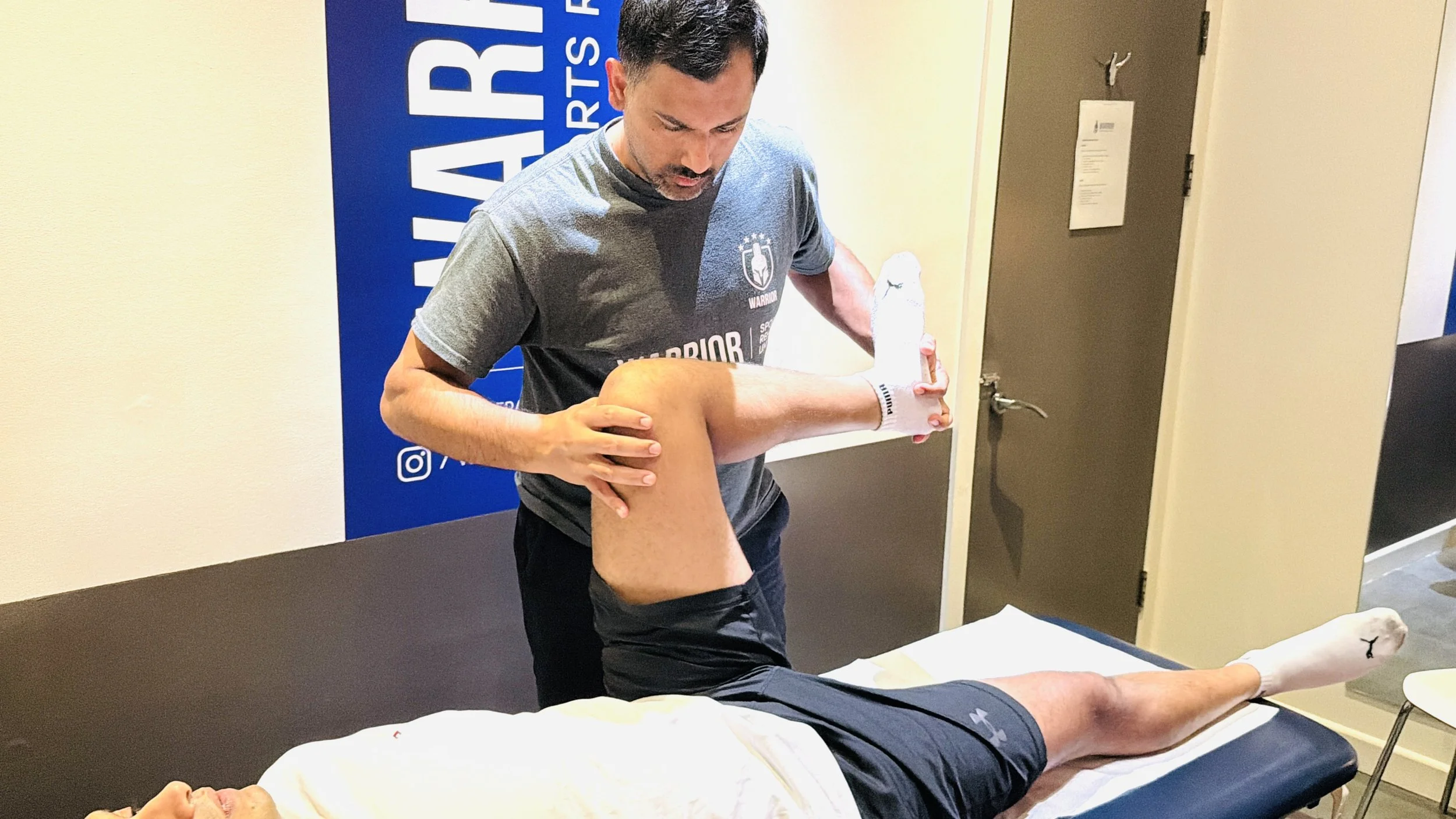
Clive assessing a hamstring injury at our Shoreditch Clinic
Common signs and symptoms
These are common patterns. Only an assessment can confirm what is driving your pain.
A deep ache over the sitting bone that gets worse the longer you sit or drive.
Sharp pain on a sprint or at the end of a stretch.
Stiffness low in the buttock first thing in the morning, which eases once you're moving.
More pain on hills, and at the bottom of a deep squat or deadlift.
Pain, tingling or numbness down the back of the leg, sometimes past the knee. With this one, our physios check your lower back and the sciatic nerve too.
Tendon pain here can limit daily life as well as sport (Goom et al., J Orthop Sports Phys Ther, 2016, PMID 27084841).
How we treat it at Warrior
My assessment starts by finding the source: the tendon, the muscle, or the lower back and sciatic nerve. I use the slump test and lower back movements, then press over the tendon and note which test brings your pain on.
Goom and colleagues found no randomised trials of rehab for this tendon. In their view, principles from Achilles and patellar tendon rehab seem to apply, with less evidence behind them (Goom et al., J Orthop Sports Phys Ther, 2016, PMID 27084841). Nasser and colleagues, searching studies up to 2019, found too little evidence to put one treatment ahead of another and suggest starting with what has worked for other tendons (Nasser et al., Int J Sports Phys Ther, 2021, PMID 33842025).
We load the tendon in stages. You begin with isometric holds, where you tense the muscle without moving the joint. Slow, heavy strength work comes next. After that we add speed, and then running. Some patients get hands-on treatment or sports massage to stay comfortable as the load goes up.
After an acute strain, Heiderscheit and colleagues link a lower re-injury risk to rehab that includes eccentric strength training and control exercises, with objective measures to judge readiness to return to sport (Heiderscheit et al., J Orthop Sports Phys Ther, 2010, PMID 20118524). We measure strength in both legs with VALD testing and use the result to decide when you move up a stage. Later on, you train in our Open Gym. Acute strains often need 3 to 6 sessions, and chronic tendon problems take longer. Fees are on our pricing page.
Recovery time and what to expect
In clinic, a mild strain caught early tends to be measured in weeks, and a tendon problem in months. With tendons, some settle after simple changes and others resist every treatment tried (Cook and Purdam, Br J Sports Med, 2009, PMID 18812414).
Two setbacks we see often: sprinting before the strength is back, and going straight from rest to full training. Once you're running again, we keep some of the work from our hamstring and glute drills for runners video in your programme.
If a tendon won't settle with conservative (non-surgical) care, surgery is an option to discuss with a specialist. In athletes, Lempainen and colleagues present it as a valuable option once conservative treatment has failed (Lempainen et al., Am J Sports Med, 2009, PMID 19218559).
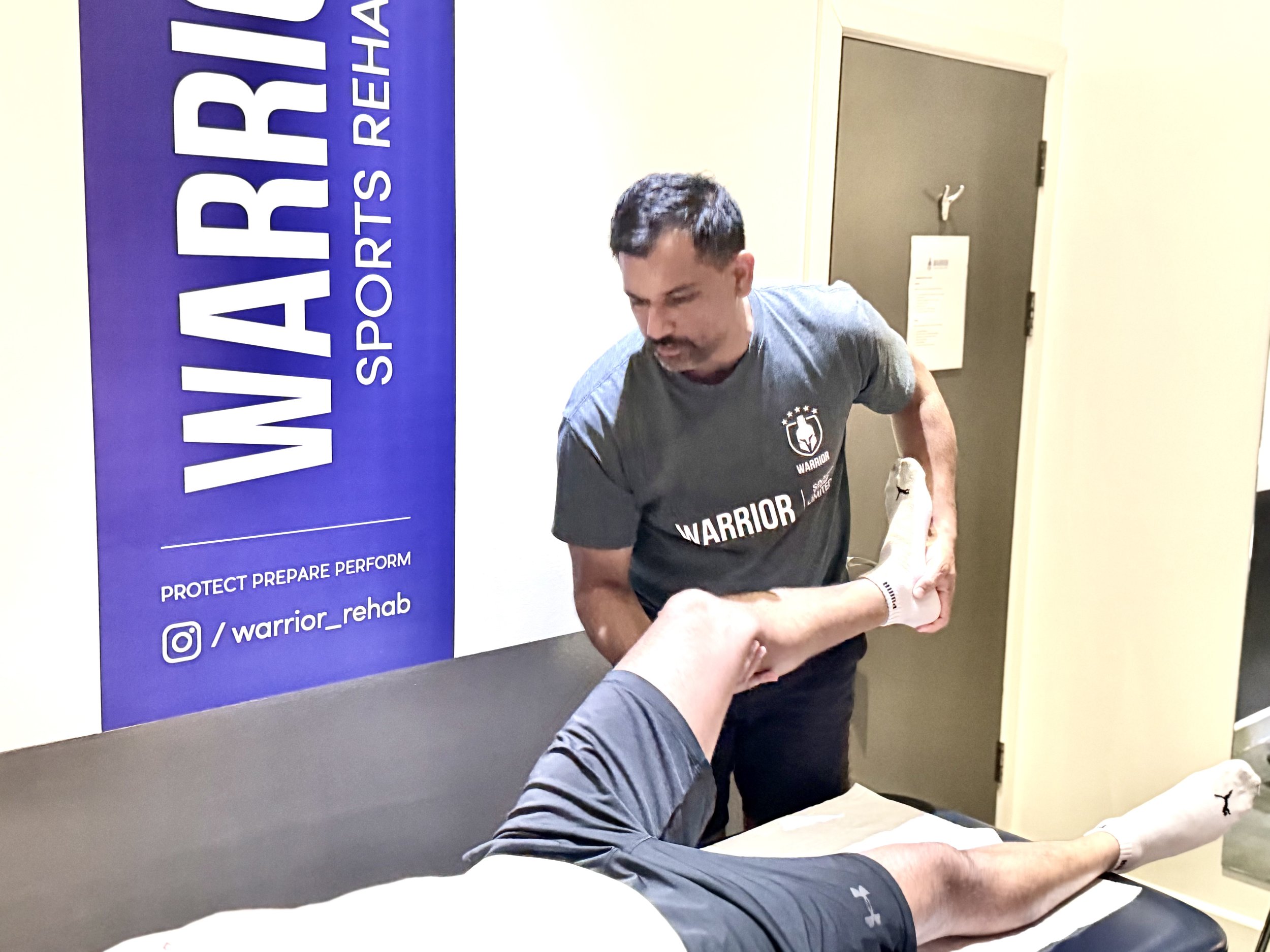
Clive works at our Shoreditch Clinic on Tuesdays and Thursdays
When to see a physio sooner
If you felt a pop or snap in the buttock when it happened, book an assessment straight away. Bruising down the back of the thigh makes it more urgent. We'd want to rule out a significant tear at the sitting bone, which may need a scan.
Don't wait long if the leg feels weaker than before, or if you have back pain with pins and needles or numbness down the leg.
If you notice numbness around the saddle area, a change in bladder or bowel control, or weakness that is getting worse, seek medical care the same day rather than waiting for a physio appointment.
Frequently asked questions
Can I still run with high hamstring tendinopathy?
We'd need to assess you first, because the answer depends on the cause. The first things we pause are fast running and hill sprints, which often set this pain off. Easy running can sometimes carry on. We bring speed back in stages once your tested strength is close to the other leg's.
Why does sitting make my hamstring pain worse?
When you sit, your weight goes through the sitting bone, and the hamstring tendon attaches right there. If that tendon is irritated, a hard chair or a long drive can bring the ache on. We'll ask you to break up long spells of sitting while we build the tendon's tolerance back with exercise.
Should I stretch my hamstring if it feels tight?
We ask people to hold off on hard static stretching early on. A deep hamstring stretch bends the hip into the position that often sets this pain off. In clinic we find the tight feeling eases as the tendon settles and strength returns, so we use gentle movement and strength work instead.
Is it hamstring tendinopathy or sciatica?
It's hard to tell on your own. The sciatic nerve runs right beside the hamstring tendon at the sitting bone, so the two can feel alike, and sometimes both are involved. Our physios test the nerve, your lower back and the tendon at your first appointment, then treat what they find.
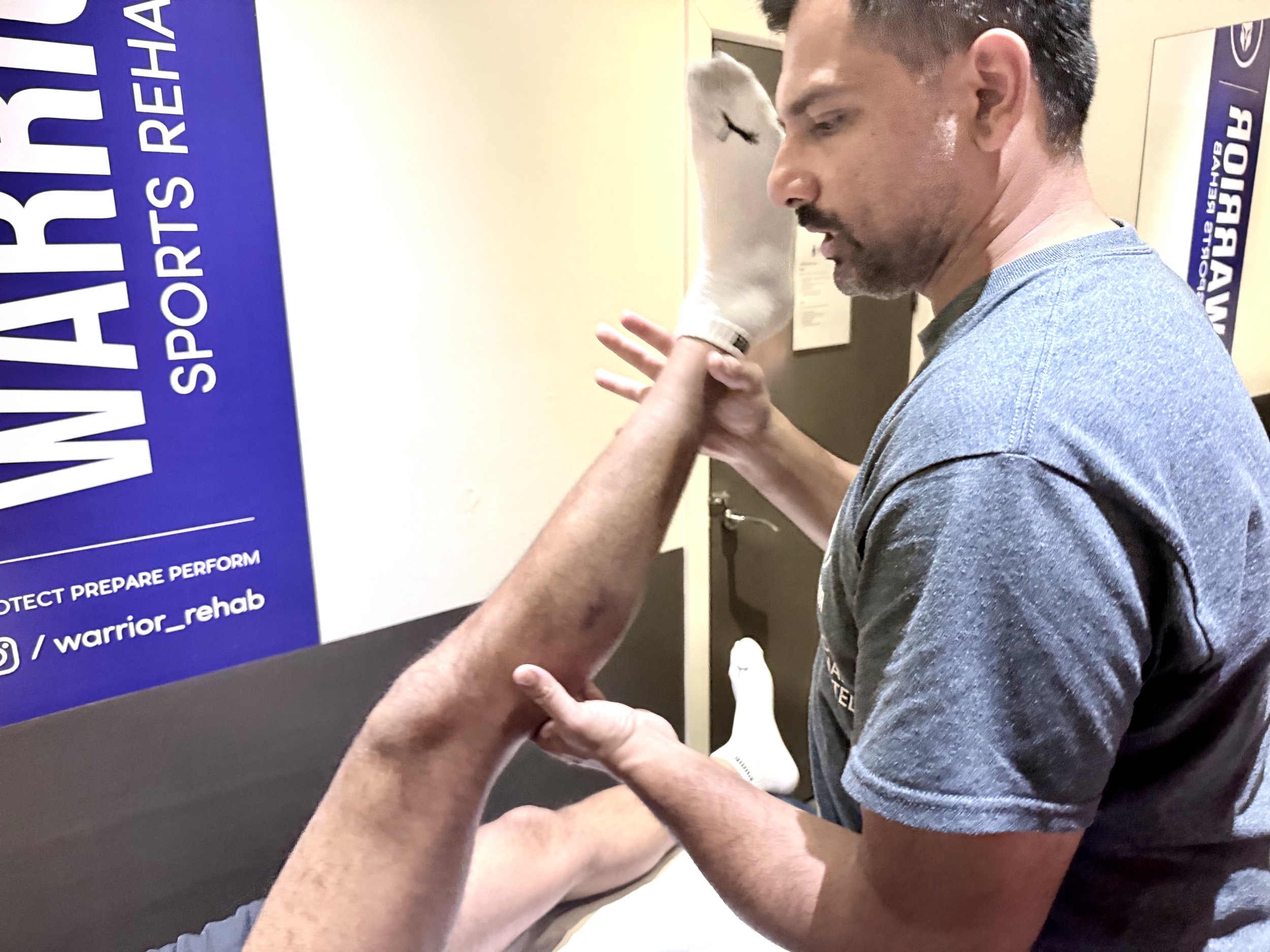
Book an assessment today with Clive
Book an assessment
If high hamstring tendinopathy stops you running or makes sitting painful, book an assessment with Clive. Clive works from our Shoreditch clinic. The first physiotherapy appointment combines assessment and treatment.
This article is general information, not a diagnosis. Book an assessment for advice on your own case.
Written by Clive Periera, Specialist Physiotherapist, HCPC registered, Warrior Sports Rehabilitation.