Desk neck pain: a practical London recovery plan
Desk neck pain affects a lot of active Londoners who mix long desk hours with regular training. The pattern is familiar. Stiff across the top of the shoulders by mid-afternoon, a neck that will not turn fully when you check over your shoulder, a dull ache that follows you home. Recovery does not need a change of job or a perfect posture. It needs a plan that restores joint mobility and rebuilds tissue tolerance, then keeps movement in your working day.

The physiological cause of desk neck pain
The head needs a stable, mobile base to keep a natural line of sight. When you sit still for eight to ten hours, the muscles that hold you in position have to overwork. Blood flow drops in those tissues and the surrounding muscles start guarding. That is where the stiffness and the tension headaches come from, and the ache across the upper back. Neck pain is one of the main causes of musculoskeletal disability worldwide (Safiri et al., BMJ, 2020, PMID 32217608).
In clinic, I most often see patients whose symptoms come from a lack of movement variety, not from any structural damage. The neck is sensitive because it sits above the pathways that carry the head and the nervous system. When the upper back stops moving well, the neck absorbs the load. Restore mobility in the upper thoracic spine and the shoulders, and the neck muscles usually stop protecting.
Sleep matters as well. Poor rest raises pain sensitivity and slows tissue repair (Finan et al., J Pain, 2013, PMID 24290442). If sleep is short, the movement work has less chance of holding.
A four-stage plan
Phase 1: Comfortable mobility
Stay inside a mild discomfort range, around 3 out of 10. Add controlled neck rotations and shoulder rolls through the day to break long stretches of stillness. Short and often beats one long stretch session in the evening. Skip aggressive stretching or forced end-range positions for now.
Phase 2: Thoracic and shoulder integration
Bring the mid-back and the shoulder blades into the picture, since they carry the base the neck relies on. Thoracic extension and scapular control exercises take load off the sensitive neck structures. Hands-on work, whether osteopathic treatment or sports massage, can help early tissue tolerance during this phase.
Phase 3: Strength and tissue loading
Build endurance in the deep neck flexors, the trapezius and the upper back. Progressive resistance work grows the capacity to hold a desk posture without symptoms building. Structured exercise reduces chronic mechanical neck pain and improves function (Gross et al., Cochrane Database Syst Rev, 2015, PMID 25629215).
Phase 4: Ergonomics and habit
Set the workstation up for comfort, not rigid alignment. Add a short movement break every forty-five minutes. Keep sleep consistent and manage training volume so the tissues have room to recover.
Move to the next phase when the current one feels comfortable and flare-ups settle.
Common mistakes
Aggressive stretching, repeated self-cracking, pushing through sharp pain, forcing a stiff “correct” posture. All of these agitate the sensitive neck tissues and reinforce the protective spasm, and none of them help for long.
Cracking the neck can feel good in the moment. It usually irritates the joints that already move too much and leaves the tight ones untouched. Forcing the chest up and pulling the shoulders back adds strain lower down without solving anything. A relaxed, adaptable posture beats a rigid one.
The other common error is training through sharp symptoms. When pain spikes, the nervous system guards harder, so stay inside a mild discomfort boundary. And skimping on sleep will hold recovery back whatever you do in the gym.
How Warrior Sports Rehabilitation supports your recovery
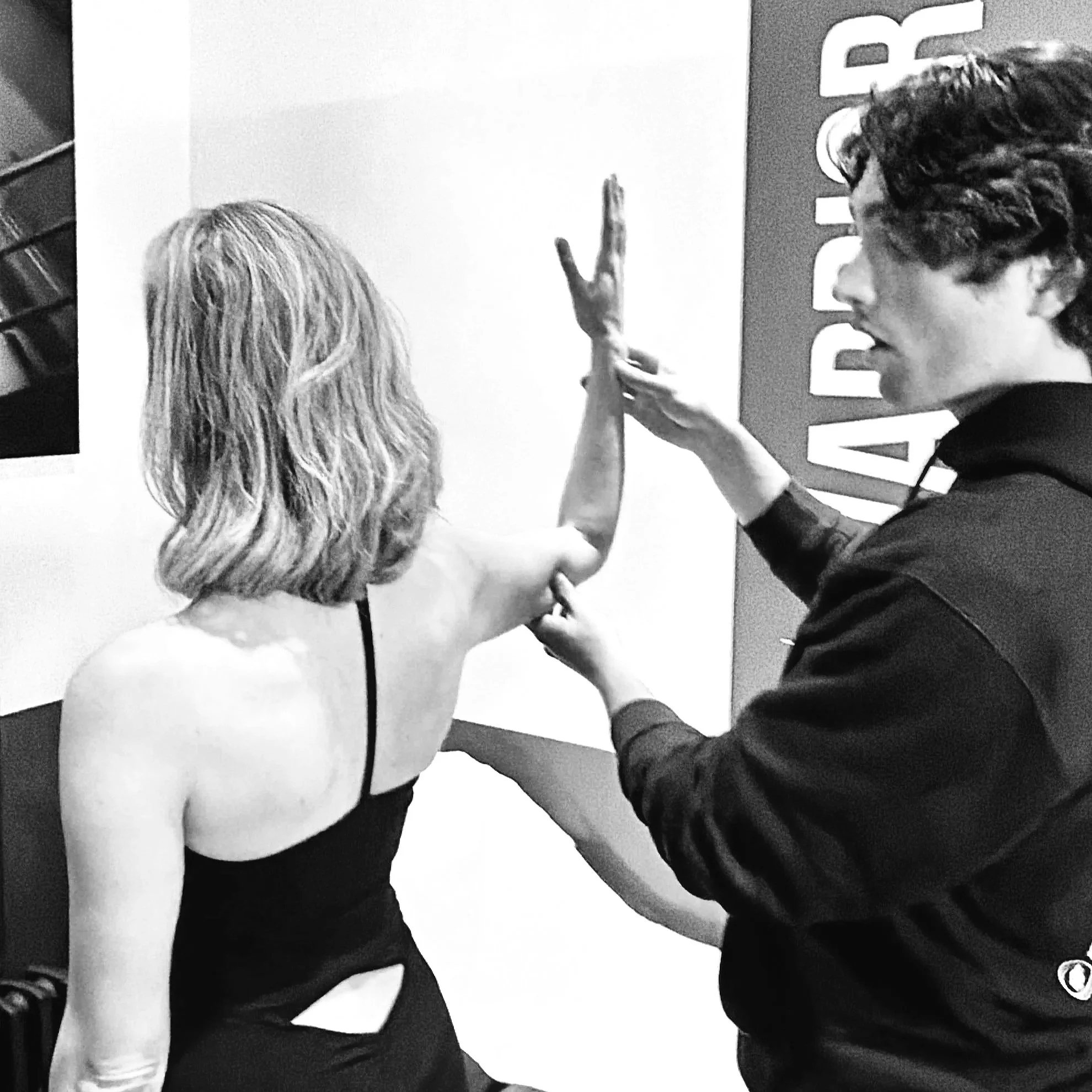
In clinic, six times out of ten I treat the upper back and the shoulder girdle before I touch the neck. The neck is usually reacting to stiffness lower down.
Your first session is a full assessment of the neck, the upper back, the shoulders and the jaw, plus a screen for red flags: upper limb weakness, clumsiness, night pain you cannot settle. If nerve compression or a disc problem needs a specialist opinion, we coordinate with your GP directly.
From there it is hands-on treatment and an active rehab plan you can run at home and in the gym. Our team covers osteopathy, physiotherapy and sports massage, so the soft tissue work, the joint mobilisation and the exercise programme come from people who talk to each other.
We look at your work setup, your training schedule and your sleep to spot the smaller aggravating factors, and we re-test at each step so you can see the change for yourself.
Frequently asked questions
How long does it take to recover from desk neck pain?
A rough clinical rule: the length of time you have had the pain, plus three weeks of structured rehab. Most people notice a clear shift in mobility and tension inside three to six weeks.
Should I stop working out if I have neck pain?
No, but modify. Heavy upper-body loading and anything that spikes sharp symptoms above a mild level comes out for a while. Cardio, lower-body work and gentle neck mobility keep circulation up and help recovery.
Can a bad desk setup cause neck pain?
A poor setup does not help, but staying fixed in one position causes more trouble than the chair itself. Set the monitor near eye level, keep the workspace comfortable and change position often.
When should I see a doctor for neck pain?
Straight to a doctor if the pain follows a fall or trauma, or if it comes with red flags: unexplained weight loss, constant night pain, difficulty swallowing, dizziness, double vision, or progressive weakness or clumsiness in the hands, arms or legs.

Book an assessment
If desk neck pain is getting in the way of your work or your training, book an in-person assessment at our Hoxton or Shoreditch clinic. Fees and packages are on the pricing page, or contact us to speak to a practitioner about where you are.
Written by Philip Rossiter, Sports and Rehabilitation Osteopath, GOsC registered, Warrior Sports Rehabilitation.