
BPC-157: What the Evidence Says About Injury Recovery
BPC-157 is a synthetic pentadecapeptide [a chain of 15 amino acids] originally isolated from gastric juice, and it has shown regenerative effects across many animal models (McGuire et al., Curr Rev Musculoskelet Med, 2025, PMID 40789979). Active Londoners, runners and lifters frequently ask about its potential to speed up tendon, muscle and joint healing after hearing it discussed on popular health podcasts. Understanding the preclinical science and the clinical reality helps you make informed choices about your injury recovery.
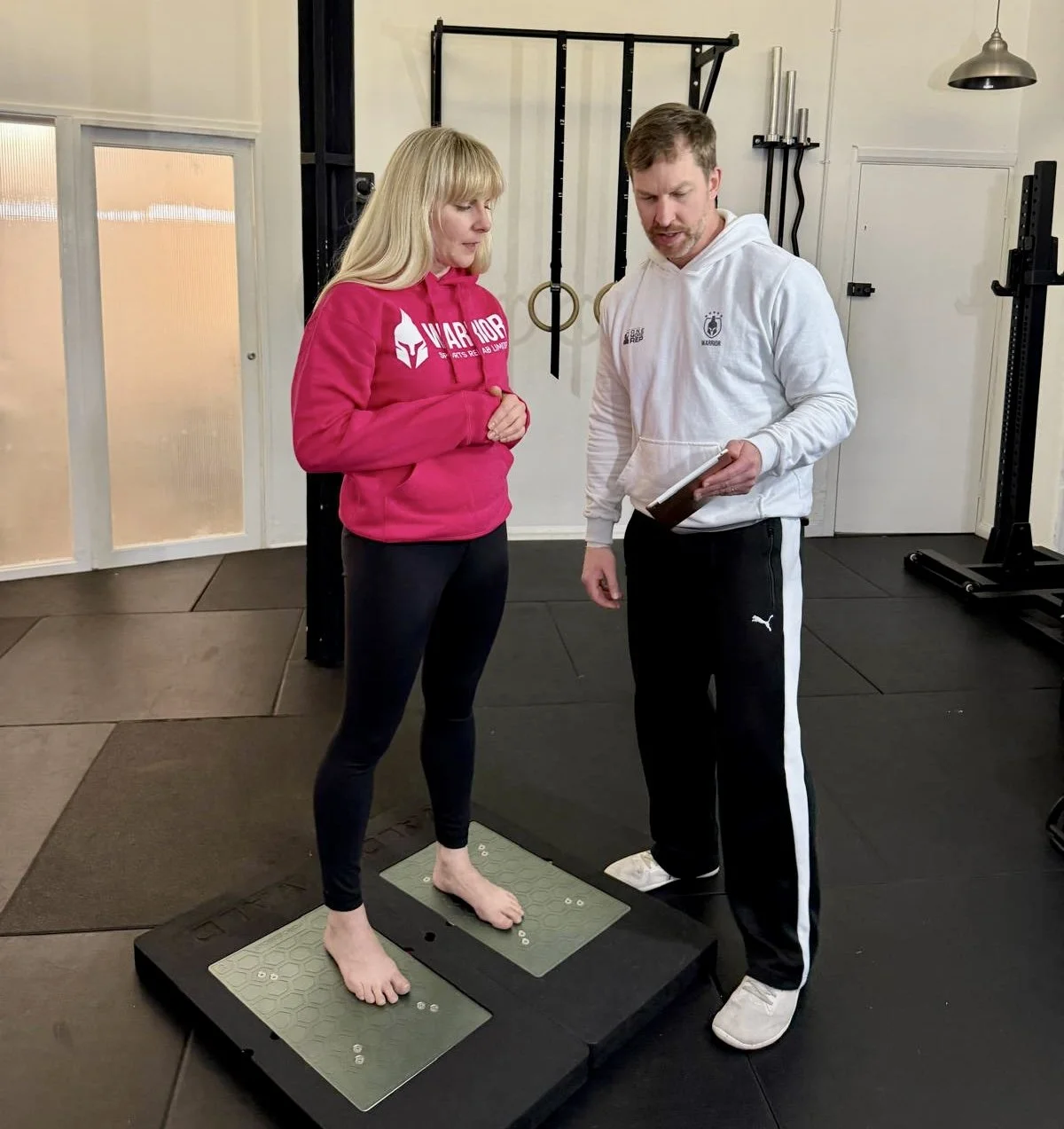
Tom Bradley Physiotherapist using VALD force plates to test an athlete's leg strength in our Warrior Sports Rehab Gym and clinic (26 Phipp Street, Shoreditch).
What BPC-157 Is and How It Works
Body Protective Compound 157 (BPC-157) is a 15-amino-acid fragment of a larger peptide found in gastric juice (Sikirić et al., J Physiol Paris, 1993, PMID 8298609). Researchers have studied it in the laboratory for its effects on blood vessel growth, cell signalling and soft tissue repair.
Preclinical research points to several biological pathways. BPC-157 stimulates angiogenesis [the formation of new blood vessels] by activating vascular endothelial growth factor receptor 2 (Hsieh et al., J Mol Med (Berl), 2017, PMID 27847966). In rat tendon fibroblasts [connective tissue cells that produce collagen], it increases growth hormone receptor expression (Chang et al., Molecules, 2014, PMID 25415472) and activates the focal adhesion kinase pathway [a cellular signalling route for movement and adhesion] (Chang et al., J Appl Physiol, 2011, PMID 21030672). In a rat model of alkali skin burns, topical BPC-157 sped up wound closure, and in laboratory cultures it helped blood vessel cells grow and migrate (Huang et al., Drug Des Devel Ther, 2015, PMID 25995620). A 2025 review also describes anti-inflammatory effects in animal studies (McGuire et al., Curr Rev Musculoskelet Med, 2025, PMID 40789979). Interest across fitness communities stems from these laboratory findings, though none of these mechanisms has been confirmed in human clinical care.
What the Research Shows About Recovery
Despite broad preclinical support, human data on BPC-157 are extremely limited (McGuire et al., Curr Rev Musculoskelet Med, 2025, PMID 40789979). The review's authors class it as investigational until well-designed clinical trials are done.
Preclinical Rodent Trials vs Human Trials
Only three small pilot studies have examined BPC-157 in humans (McGuire et al., Curr Rev Musculoskelet Med, 2025, PMID 40789979). Related peptides like TB-500, an amino acid sequence from thymosin beta-4 that binds actin and promotes cell migration (Goldstein et al., Expert Opin Biol Ther, 2012, PMID 22074294; Malinda et al., FASEB J, 1997, PMID 9194528), have also been studied mostly in animals: thymosin beta-4 promoted wound repair and blood vessel growth in normal and aged rodents (Philp et al., Mech Ageing Dev, 2004, PMID 15037013). We cover TB-500 in more detail in our guide to TB-500 and BPC-157.
One small study reviewed the records of 17 patients given knee injections for mixed problems, from osteoarthritis to an anterior cruciate ligament tear, and 16 of them could be reached for follow-up (Lee & Padgett, Altern Ther Health Med, 2021, PMID 34324435). There was no comparison group, a college student volunteering at the clinic ran the follow-up by phone, and every measure was the patients' own rating, so the study offers no high-level proof of efficacy.
Regulatory Prohibitions and Grey Market Risks
In 2022, the World Anti-Doping Agency (WADA) banned BPC-157 under its S0 category of unapproved substances, in competition and in training (McGuire et al., Curr Rev Musculoskelet Med, 2025, PMID 40789979). In September 2023, the US Food and Drug Administration (FDA) classed it as a Category 2 bulk drug, which bars its use in compounded medicines (McGuire et al., Curr Rev Musculoskelet Med, 2025, PMID 40789979). BPC-157 remains available through 'research chemical' websites (McGuire et al., Curr Rev Musculoskelet Med, 2025, PMID 40789979). When a laboratory analysed products sold online as TB500 and TB1000, their content did not consistently match their descriptions (Delcourt et al., Drug Test Anal, 2023, PMID 36482504).
If you are dealing with a persistent tendon or joint injury, book an assessment with our clinical team at Warrior Sports Rehabilitation.
Who BPC-157 Is For
BPC-157 has no proven use in people, so we can't point to any patient group it helps.
From what I see in clinic, the way people take BPC-157 now (orally or via direct injection) is not the way it was given to rodents in most studies (intraperitoneal injection). Grey-market BPC-157 comes labelled 'for research purposes only', which makes it hard to tell the actual purity or quality of what you're buying.
Given the WADA ban and the lack of good human trials, we don't recommend BPC-157 for injury recovery at Warrior. If you're thinking about using any peptide, talk to your GP or another regulated medical professional first.
What We Do at Warrior
Many people come to me for a second opinion when their rehab elsewhere hasn't been going well. Most often, the reason they aren't improving comes down to simple metrics, such as a lack of strength in specific muscle groups.
Over the past two years, I have seen a marked increase in patients asking about BPC-157 and TB-500 at my London clinic. Initially, enquiries came from bodybuilders, but interest quickly expanded to CrossFit athletes and individuals recovering from reconstructive ACL surgery or severe tendon damage. Much of this awareness is driven by frequent discussions on popular health podcasts such as The Joe Rogan Experience, Huberman Lab, and The Drive with Peter Attia. While some patients report subjective improvements while taking these compounds, it is impossible to isolate those effects from the physiological recovery driven by structured physical rehabilitation.
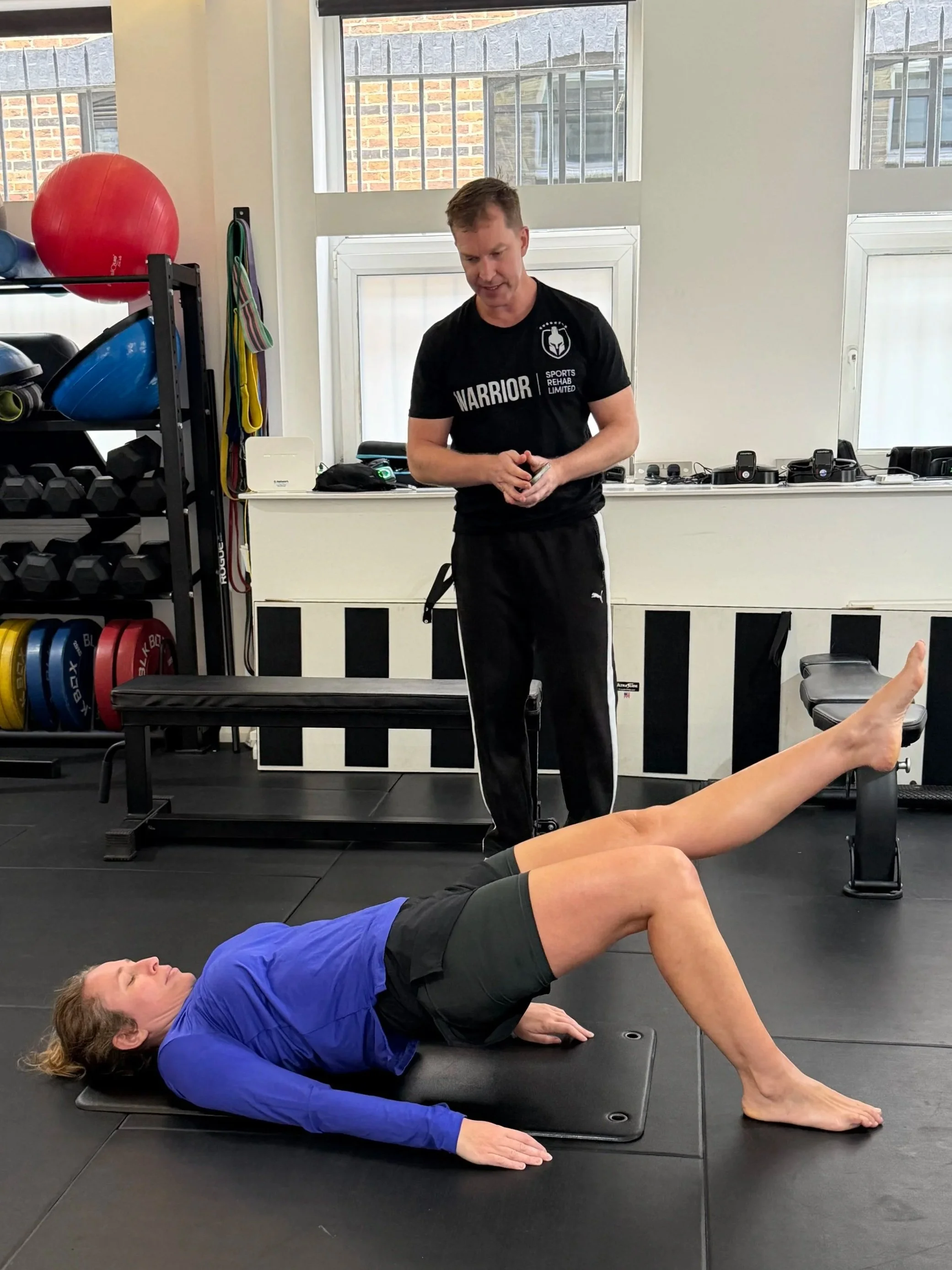
Tom Bradley Physiotherapist guiding a patient after knee injury in a rehab session at our Warrior Sports Rehab Gym and clinic (26 Phipp Street, Shoreditch).
At Warrior, our approach integrates physiotherapy, osteopathy, and soft tissue therapy under one roof to restore tissue load capacity. Using objective VALD technology, including ForceDecks force plates and handheld dynamometers, we pinpoint specific strength deficits, such as persistent hamstring weakness following ACL reconstruction. We then design progressive exercise programmes, using modalities like blood flow restriction exercise and Compex neuromuscular stimulation to build muscle in injured limbs without overloading healing structures. Read our guide on VALD technology to see how objective testing guides return-to-sport decisions. No supplement or unproven compound can substitute for progressive mechanical load and dedicated rehab.
Recovery timelines vary according to injury severity (Pollock et al., Br J Sports Med, 2016, PMID 26888072). In my clinical experience Grade 1 muscle or tendon tears (under 10% cross-sectional area damage) typically heal within 10 days to 3 weeks (Pollock et al., Br J Sports Med, 2014, PMID 25031367). Grade 2 injuries (10-50%) require 3 to 8 weeks of progressive loading (Pollock et al., Br J Sports Med, 2014, PMID 25031367). Grade 3 tears (over 50%) require up to 12 weeks of conservative management and sometimes surgical intervention (Pollock et al., Br J Sports Med, 2014, PMID 25031367). Grade 4 tears or complete ruptures can sometimes heal but often require surgical repair (Pollock et al., Br J Sports Med, 2014, PMID 25031367). If targeted strength and range of motion metrics stall during rehab, we organise an MRI and refer the patient to a specialist sports physician or orthopaedic surgeon.
Frequently Asked Questions
What is BPC-157 used for?
BPC-157 is an experimental synthetic peptide, studied in animals for its effects on the healing of skin, muscle, bone, ligament and tendon (Chang et al., Molecules, 2014, PMID 25415472). In laboratory studies, it helps blood vessel cells grow and migrate (Huang et al., Drug Des Devel Ther, 2015, PMID 25995620). It lacks human clinical approval, and WADA bans it in sport (McGuire et al., Curr Rev Musculoskelet Med, 2025, PMID 40789979).
Is BPC-157 legal in the UK?
In sport, WADA has banned BPC-157 since 2022, in competition and in training, under its S0 category of unapproved substances (McGuire et al., Curr Rev Musculoskelet Med, 2025, PMID 40789979). Outside sport, it is sold through 'research chemical' websites (McGuire et al., Curr Rev Musculoskelet Med, 2025, PMID 40789979). In my experience, it comes labelled 'for research purposes only', which makes it hard to tell the purity or quality of what you're buying. Before using any peptide, speak to your GP.
Does BPC-157 heal tendon injuries?
In rat tendon cells, BPC-157 increased growth hormone receptor expression (Chang et al., Molecules, 2014, PMID 25415472). Human evidence for tendon healing is lacking: only three small pilot studies have tested BPC-157 in people (McGuire et al., Curr Rev Musculoskelet Med, 2025, PMID 40789979). Tendon recovery relies primarily on progressive mechanical loading through structured exercise to rebuild tensile strength and load capacity, which passive supplements or unproven peptides cannot replicate.
What are the side effects of BPC-157?
The three small human pilot studies reported no adverse effects, but rigorous, large-scale trials are lacking (McGuire et al., Curr Rev Musculoskelet Med, 2025, PMID 40789979), so its safety in people is unknown. Products bought online add another risk. When a laboratory analysed products sold online as TB500 and TB1000, their content did not consistently match their descriptions (Delcourt et al., Drug Test Anal, 2023, PMID 36482504).
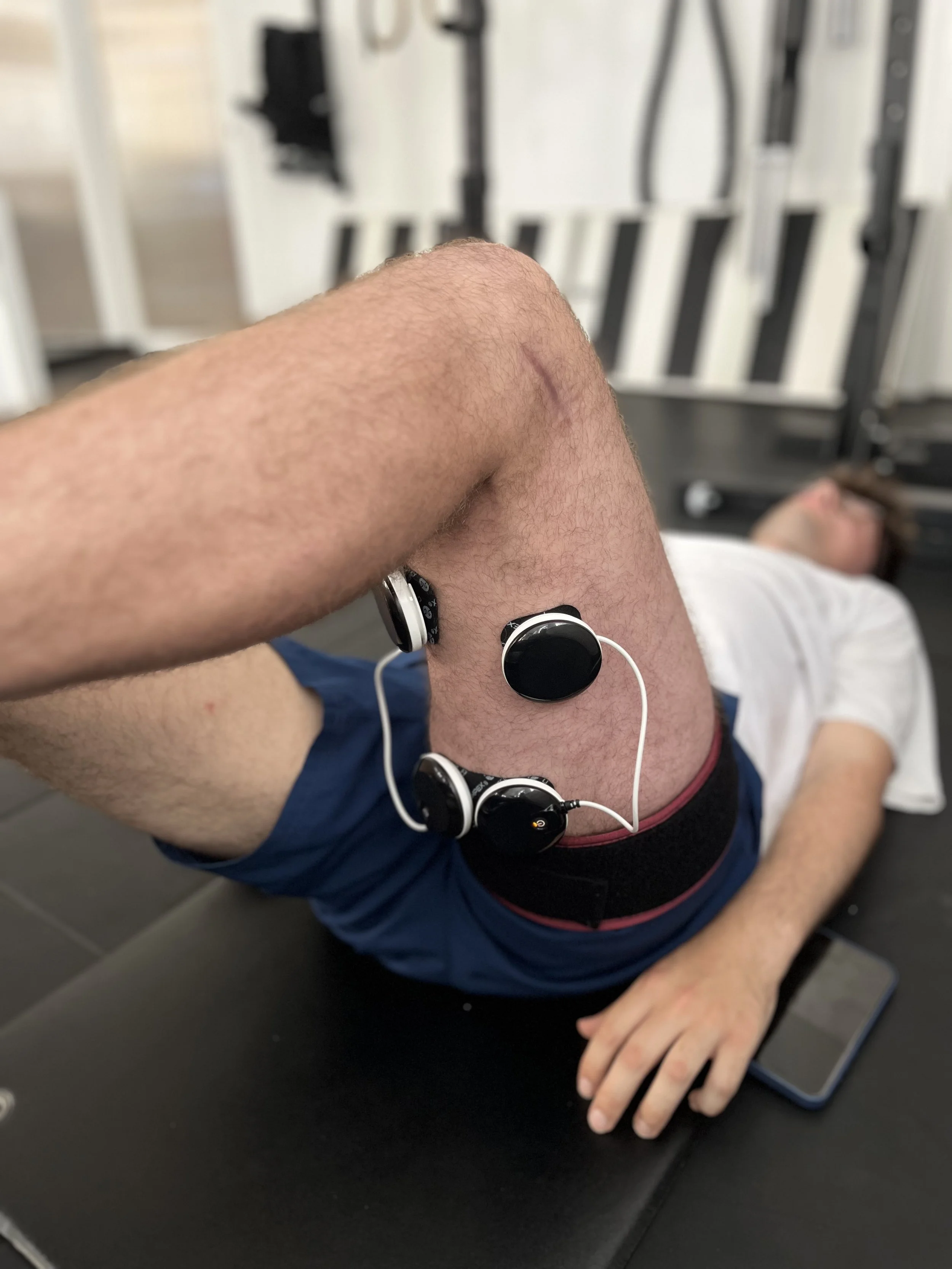
Patient undergoing blood flow restriction and NMES training during post-operative knee recovery at our Warrior Sports Rehab Gym and clinic (26 Phipp Street, Shoreditch).
Practical Next Steps for Injury Recovery
If a tendon, joint or muscle injury is lingering, an unproven compound bought online won't replace an accurate diagnosis and structured physiotherapy. At our Hoxton and Shoreditch clinics, we evaluate your biomechanics, measure exact force production, and deliver a tailored treatment plan to get you moving back to full capacity. Check our pricing page to learn about session options, or book an initial assessment today.
This article is general information, not a diagnosis. Book an assessment for advice on your own case.
Written by Tom Bradley, Founder and Lead Physiotherapist, HCPC registered, MCSP at Warrior Sports Rehabilitation.